The bard from the Atlantic margin
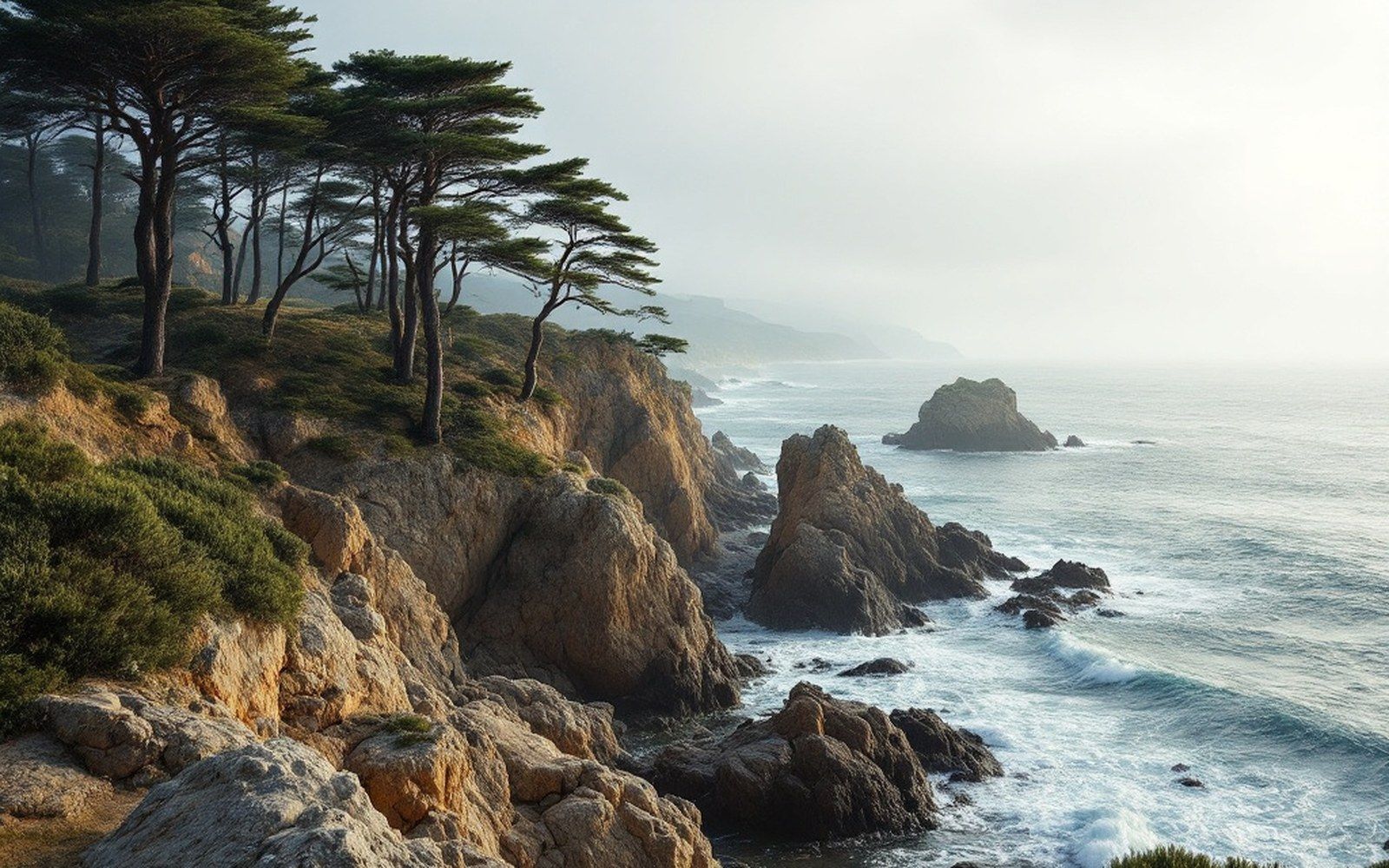
Eduardo Pondal was born in 1835 in Ponteceso, a small parish on the Costa da Morte — the Coast of Death — in A Coruña province, where the Atlantic drives hard against granite headlands and the pines that covered the dunes were loud in every wind. He died in A Coruña city in 1917. Between those dates he built a poetic identity more consciously constructed than that of almost any other figure in the Galician Rexurdimento ↗ — the nineteenth-century literary revival that reclaimed Galician as a written language after centuries of marginality — and the landscape of his childhood was not just a backdrop but the actual substance of his verse.
His major collection, Queixumes dos pinos — Laments of the Pines — appeared in 1886, more than two decades after Rosalía de Castro's Cantares gallegos (1863) had announced that Galician could carry serious literary weight. Where Rosalía worked in a lyric register close to the oral, to folk melody and everyday speech, Pondal reached in the opposite direction: toward a deliberately elevated, archaic diction that he associated with the ancient Celtic past he believed Galicia shared with Ireland, Wales and Brittany. The pines of his coastal home became in his verse not simply trees but bardic presences, voices lamenting a lost heroic age. The title is everything: the forest itself speaks.

A bardic programme
Pondal's ambition was, frankly, ideological in the literary sense. He wanted a poetry that would give Galician the dignity of a classical tradition — not one borrowed from Castilian but rooted in a specifically Galician and pan-Celtic imagination. He used the word bardo (bard) to describe himself and the role he intended, and the Biblioteca Virtual Galega ↗ preserves texts and scholarship that make clear how systematically he assembled his poetic persona: the solitary figure on the windswept headland, communing with the elemental landscape and carrying the memory of the people.
The register he chose to do this was both an achievement and a limitation. His Galician is dense with Latinisms, archaisms and coinages shaped to sound ancient; it can feel remote where Rosalía feels immediate, ceremonial where Manuel Curros Enríquez — who published Aires da miña terra in 1880 — felt combative and topical. But in the best poems of Queixumes dos pinos the weight of that diction earns its place. The long vowels, the accumulation of stressed syllables, and the way lines are broken to make the reader slow down and feel the drag of the Atlantic — these are technical choices working with the sound of the language, not against it.
He also wrote what became the lyric of the Galician anthem, Os Pinos, a text set to music by Pascual Veiga. Whatever the later life of that text in ceremony and symbol, on the page it is a poem in Pondal's characteristic mode: the pines addressing the people, the bardic mediating between landscape and memory.
What he passed on
Pondal, Rosalía de Castro and Curros Enríquez form the canonical triad of the Rexurdimento, and the Real Academia Galega has commemorated all three through the Día das Letras Galegas, the annual day dedicated to a Galician writer. The triad is not simply a convenience: the three represent genuinely distinct possibilities for what a revived literary language could sound like. Rosalía's intimacy, Curros's civic anger, Pondal's mythological elevation — together they mapped almost the whole range of registers a modern poetry might need.

What Pondal's example offered to later poets was permission to be ambitious about the music of the line. A poet working in Galician in the twentieth century — Xosé María Díaz Castro included, writing his single collection Nimbos in the 1950s though not publishing it until 1961 — could look back at Queixumes dos pinos and see that the language was capable of a slow, weighted, formally demanding lyric. The bardic posture Pondal adopted was not one later poets necessarily wanted; the proof that Galician could hold that much pressure in a line was something they could use.
The register he chose to do this was both an achievement and a limitation.