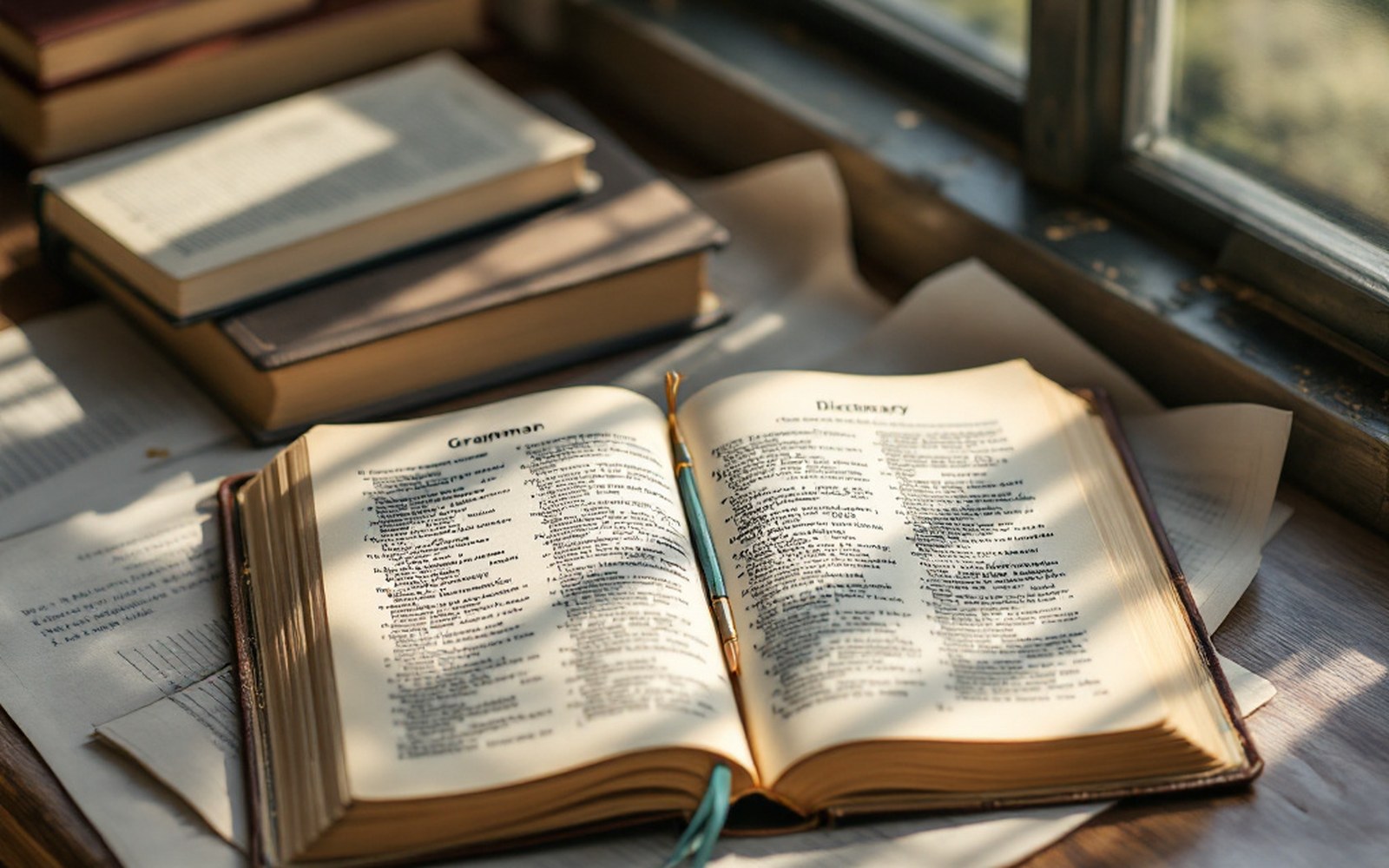
The spelling of Galician is not a given — it is an argument that has been running for over a century
Every written word in Galician sits inside a history of decisions. The shape of the vowel, the accent mark, the doubled consonant — none of this is natural; somebody chose it, and somebody else disagreed. For a small language that spent centuries without official written form, the question of how to spell it carries extra weight. When Xosé María Díaz Castro was writing the poems that became Nimbos, no single standard governed the page, and the orthography he used reflects that unsettled moment.
What was decided, and when
The nineteenth-century Rexurdimento — the literary revival that brought Galician back onto the page after the Séculos Escuros, the dark centuries of near-total absence from writing — produced great poets before it produced a stable spelling. Rosalía de Castro's Cantares gallegos appeared in 1863, Manuel Curros Enríquez ↗'s Aires da miña terra in 1880, Eduardo Pondal's Queixumes dos pinos in 1886. Each wrote in the language as they heard and felt it; each spelled it slightly differently. The Real Academia Galega, founded in 1906, worked toward codification, but consensus took decades. A set of orthographic norms was issued in 1982, and the current standard — maintained by the Real Academia Galega and the Instituto da Lingua Galega — stabilised the rules that Galician writers use today.

The core dispute running beneath all these decisions was a question of linguistic kinship. Galician and Portuguese share a medieval common root; they diverged as political borders hardened. A school of thought known as reintegrationism argued that Galician spelling should reflect that deep kinship — should look, in places, like written Portuguese. The standard that prevailed took a different path, building norms from Galician as it is actually spoken, closer to Castilian graphical conventions in certain details while remaining its own system. When you read Nimbos, you are reading a text that stood just before that 1982 settlement, when the argument was open.
The marks on Díaz Castro's page
Galician orthography has features that reward attention. The language marks open and close vowels with grave and acute accents in ways that Castilian does not — distinctions of sound that the written accent preserves for the eye. It has its own treatment of the letter ñ, preferring nh in some forms and n in others depending on context and historical period. The h is largely silent and often absent where a related Castilian word carries one. The nasal vowels that colour speech in the inland Terra Chá of Guitiriz, where Díaz Castro grew up, leave traces in the spelling of certain endings.
None of this is decorative. A poet working in Galician chooses words in part for their written shape as well as their sound, and the orthographic form of a word affects where stress falls, how a line is read aloud, and how an enjambment lands. The spelling is the score as much as the dictionary entry. Change the norm, and you subtly change the poem — which is one reason that editions of Nimbos have sometimes needed to navigate between the forms Díaz Castro used and what later norms would require.
For the reader coming from outside
A reader approaching Galician for the first time through Nimbos will notice that it looks nearly — but not quite — like Castilian Spanish on the page, and nearly — but not quite — like Portuguese. That doubleness is not accident; it is the language's own position ↗ between two large neighbours, maintaining a character it had before either modern standard existed. The orthography is the visible form of that position.

What this means practically: a word-by-word gloss and a verse translation will sometimes produce different spellings of proper nouns, place names and Galician-specific terms, and editors who prepare such materials must decide which norm to follow. Editorial Galaxia, which published Nimbos in Vigo in 1961 and has kept the text in print, has navigated those decisions across more than six decades. The spelling on any given page is, in that sense, an editorial position as much as a linguistic one — a quiet argument the page is still having with itself.
When Xosé María Díaz Castro was writing the poems that became Nimbos, no single standard governed the page, and the orthography he used reflects that unsettled moment.