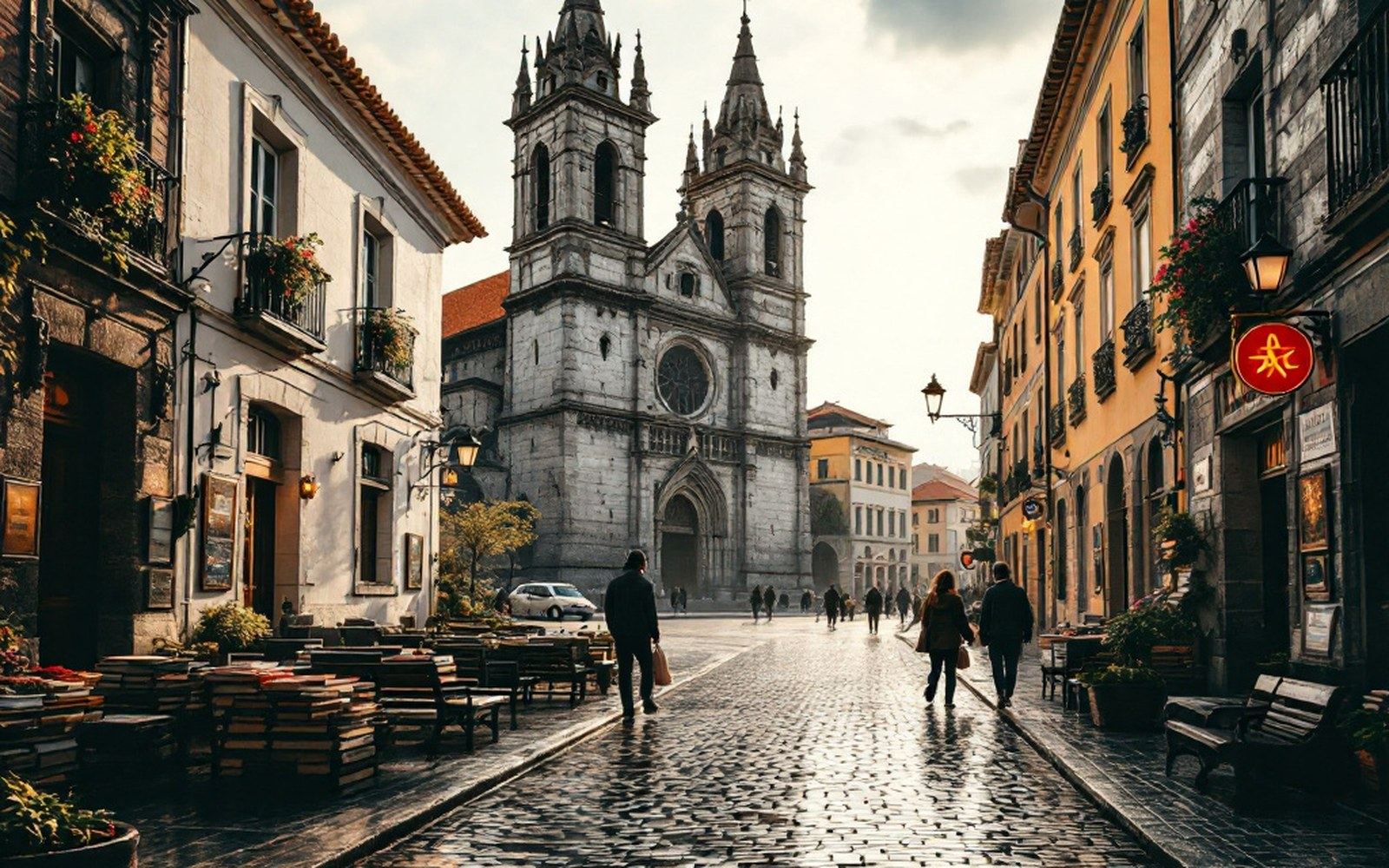
The seminary years
Xosé María Díaz Castro ↗ was born in Os Vilares ↗, a small parish in the Terra Chá flatlands of inland Lugo, and his early intellectual formation happened not there but in Mondoñedo, the ancient episcopal city to the northeast. The Seminario Diocesano de Mondoñedo was where boys from rural Lugo who showed scholarly promise went to get an education that their villages could not supply. Díaz Castro entered it young and stayed long enough to absorb its particular atmosphere: Latin, theology, music, and — critically — the humanist tradition of reading texts closely in multiple languages.
The town had a sense of itself as a place where language was taken seriously.
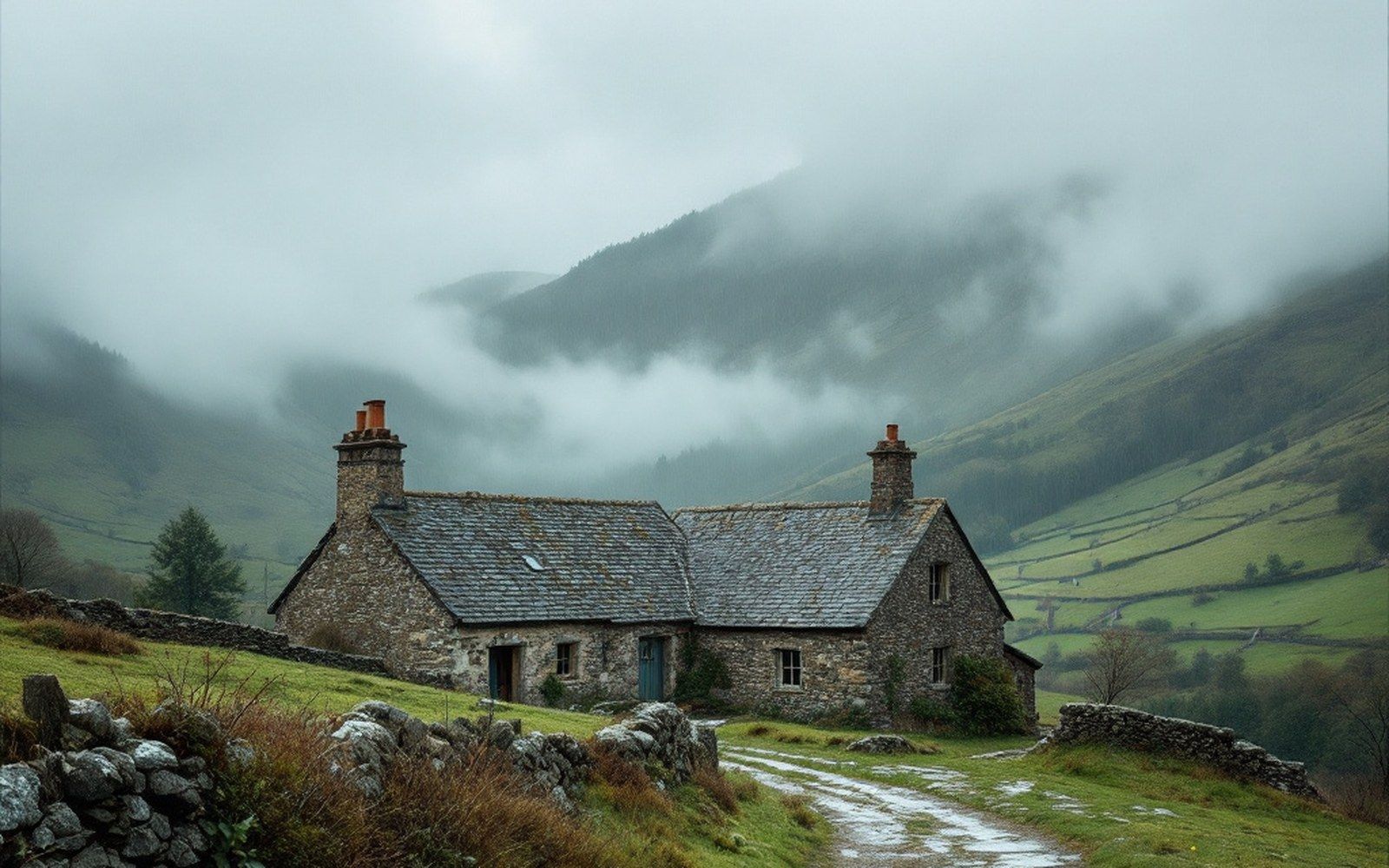
Mondoñedo itself had its own literary freight. The prose writer Álvaro Cunqueiro, one of the most distinctive voices Galicia produced in the twentieth century, came from there. The town had a sense of itself as a place where language was taken seriously. For a boy from the flat, wet country of the Terra Chá, arriving in a cathedral city with a functioning library and a tradition of letters must have been a transformation. The poems of Nimbos are saturated with the natural world of the north — light on water, the weight of cloud, the behaviour of seasons — but the mind shaping those images had been trained in a seminarian's discipline of reading.

He did not become a priest.
The working life in Madrid
What Díaz Castro did instead was translate. He moved to Madrid and spent the largest portion of his adult life working as a professional translator, primarily for Spanish publishing houses and institutions. The languages he worked in included Italian and Portuguese alongside Spanish; he was, by training and temperament, a man who lived between tongues. His professional output as a translator was considerable, though it remained largely invisible in the way that translation work almost always is — credited in small print, unread as labour.
The displacement this implies is worth holding in mind when reading Nimbos. The book was published in Vigo in 1961 by Editorial Galaxia, the Galician publisher that had been founded a decade earlier to keep the language in print during a period when its public use was severely constrained. Díaz Castro was writing the poems in Galician while living and working in Castilian Spanish, in a city far from the landscape that fed the images. That is not a small thing. The collection arrives charged with distance — not the performed nostalgia of exile, but something quieter: a precise attention to a world the poet was not inside while he wrote.
The biographical fact that he published only one collection in Galician across his entire lifetime is easier to understand against this backdrop. A translator employed by Madrid publishing houses, writing poetry in a minority language, living in a city where that language had no public presence — the conditions were not hospitable. That Nimbos exists at all reflects an act of sustained private intention across years of professional life spent working in other people's words.
The shape of the century
This pattern — seminary formation, displacement to a Spanish city, professional life in Castilian while private literary identity remained Galician — was not peculiar to Díaz Castro. It was close to a structural feature of Galician intellectual life in the mid-twentieth century, a consequence of where the economy was, where publishing was, and what the pressures of the period enforced.
What individuates Díaz Castro within that pattern is the quality of the thirty-two poems he brought back: compressed, formally assured, rooted in a specific northern light. Rosalía de Castro had written from her own forms of displacement a century earlier; the problem of writing a Galician literature from somewhere other than Galicia was not new. Díaz Castro's answer was a single, spare book, and the answer was sufficient.